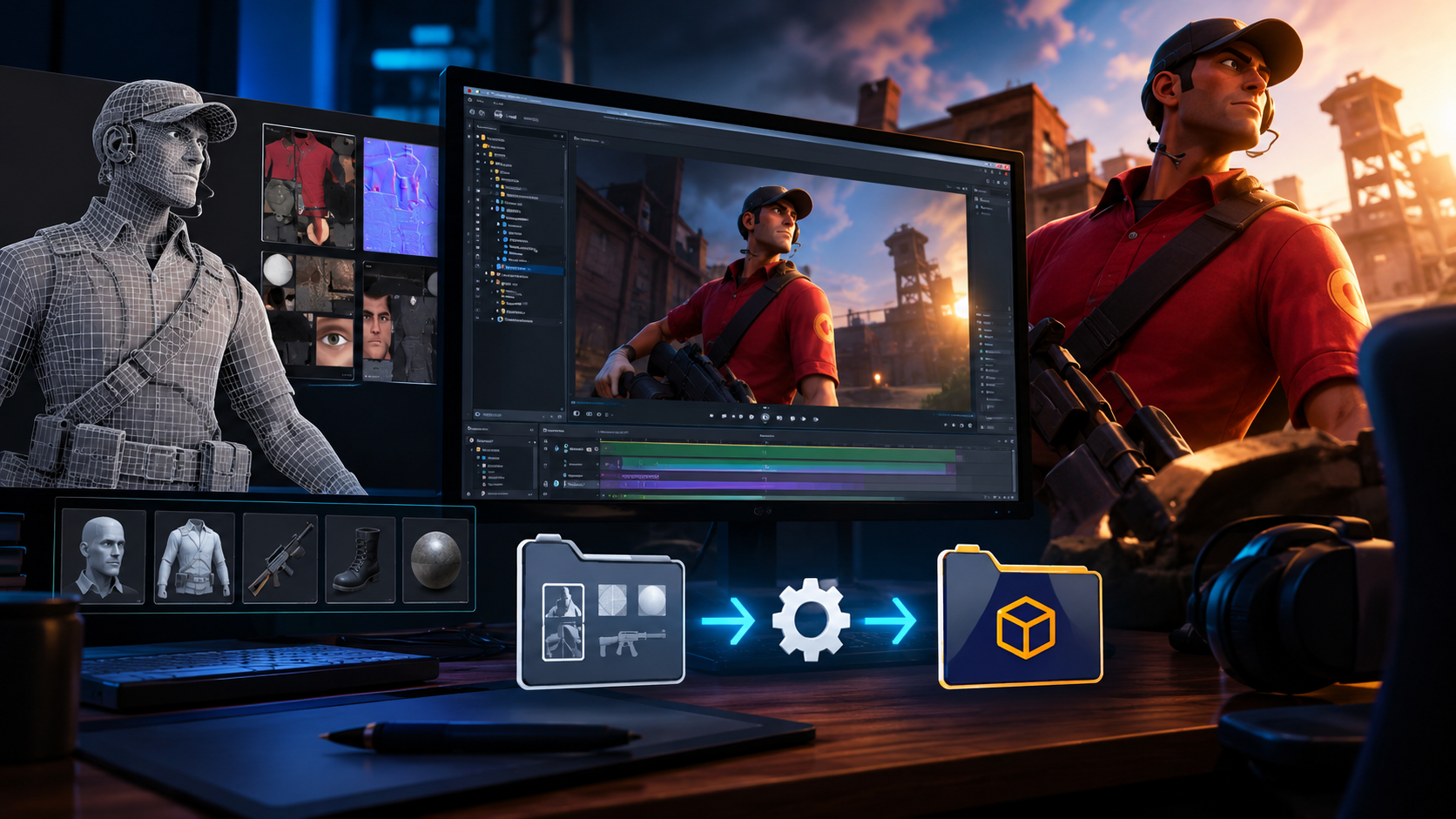
In the world of digital creativity, animation, game development, and virtual storytelling, technical tools often determine how smoothly an idea can move from imagination to reality. SFM compile is a phrase commonly associated with Source Filmmaker workflows, particularly the process of preparing, compiling, and managing assets used in Source-based environments. For creators working with models, animations, materials, maps, and other digital assets, understanding compilation can make a major difference in both efficiency and final quality.
Source Filmmaker, widely known as SFM, has remained an important creative environment for people interested in producing animated scenes using assets from Valve’s Source engine ecosystem. While the software can appear approachable at first, its underlying workflow involves several technical concepts. Compilation is one of those concepts, and learning how it works can help creators better understand what happens behind the scenes when an asset becomes usable inside a project.
This article explores SFM compile from a practical and creative perspective. It explains the meaning of compilation, why it matters, how it connects different asset types, and why creators sometimes encounter problems during the process.
What Does SFM Compile Mean?
The term SFM compile generally refers to preparing source assets so they can be converted into formats that Source Filmmaker or related Source engine tools can recognize and use. A creator might begin with a model, texture, animation, or other raw asset that is not immediately compatible with the environment. Compilation transforms or packages that material into a form the software can work with.
The idea is similar to other digital development environments where raw project files are converted into optimized or usable formats. Instead of expecting the application to understand every type of source file directly, a compilation process creates files designed specifically for the engine.
For SFM creators, this can become particularly important when working with custom content. Built-in assets may already be prepared, but custom models and other modifications often require additional processing before they appear correctly in the program.
Understanding the Source Filmmaker Environment
Source Filmmaker is a creative tool designed around the Source engine. It gives users the ability to create cinematic scenes by combining characters, environments, lighting, cameras, animation, and visual effects.
Unlike traditional video editing software, SFM works more like a virtual production environment. Instead of simply arranging finished video clips, creators manipulate digital characters and objects inside a three-dimensional scene.
This approach gives artists considerable creative freedom. A scene can be staged, animated, illuminated, rendered, and adjusted repeatedly without having to reshoot physical footage. However, that flexibility also means creators need to understand how the underlying assets are structured.
Compilation becomes relevant because the engine expects assets to follow specific formats and structures. When those requirements are met, the creative process becomes much smoother.
Why Compilation Matters in SFM
Compilation matters because the Source engine cannot simply use every raw asset in its original form. Models, animations, textures, and other resources generally need to be processed in ways that allow the engine to load and interpret them.
A properly prepared asset can appear naturally inside the SFM interface. A poorly compiled asset, on the other hand, may produce missing textures, invisible geometry, broken animations, incorrect materials, or other unexpected behavior.
For creators, this means compilation is not merely a technical step. It directly affects the visual quality of the final project.
A successful compilation workflow can also reduce repetitive troubleshooting. When the underlying files are organized correctly, creators spend less time trying to identify why something is missing and more time focusing on storytelling, cinematography, and animation.
The Role of Models in SFM Compile
Models are among the most common assets associated with compilation. A three-dimensional model contains information about geometry, materials, bones, and other properties that determine how an object behaves in the scene.
A custom model usually begins in a modeling application or another development environment. Before it can be used properly in a Source-based workflow, it may need to be converted and compiled into formats recognized by the engine.
This process can involve defining how the model’s geometry is structured, how its materials are assigned, and how its bones behave. If the model is intended to move, its rigging and animation structure become especially important.
The quality of the original model also matters. Compilation cannot automatically fix every modeling problem. If geometry, rigging, or material assignments are incorrect before compilation, those issues can continue into the finished asset.
Textures and Materials
Textures are another important part of the SFM compile workflow. A model may have excellent geometry, but without properly configured materials, it may appear unfinished or visually incorrect.
Source-based materials use specific systems to determine how surfaces respond to lighting and how textures are displayed. A material configuration can influence properties such as color, transparency, reflectivity, and surface appearance.
When custom content is prepared for SFM, texture files need to be placed in appropriate locations and referenced correctly. If those paths are incorrect, the model may load with missing or unusual textures.
This is why asset organization is so important. A creator who understands the relationship between models, materials, and texture files can diagnose visual problems much more quickly.
Animation and Compilation
Animation introduces another layer of complexity. Characters in SFM often depend on skeletal systems that allow individual body parts to move naturally.
When an animated model is prepared, its bones, weights, sequences, and animation data must work together. Compilation helps convert this information into a form that the Source environment can interpret.
If something goes wrong, the symptoms may include distorted limbs, incorrect movement, missing animation sequences, or unusual poses.
Understanding the technical relationship between the skeleton and the animation data can therefore be valuable for anyone creating custom SFM content. The more complex the character, the more important this relationship becomes.
Common Problems During SFM Compile
Compilation problems are common when creators begin working with custom assets. One frequent issue is incorrect file organization. Source-based tools often depend heavily on expected directory structures, so placing a file in the wrong location can prevent it from being found.
Another common problem involves missing textures. The model may load successfully, but its materials may not display because the associated texture paths are incorrect.
Compilation can also fail because of malformed source files, unsupported settings, naming conflicts, or problems within the original asset. In some cases, an error message points directly toward the problem. In others, the creator has to investigate the asset structure manually.
Patience is useful here. Instead of changing many settings at once, it is generally easier to isolate one problem and determine whether a specific file or configuration is responsible.
SFM Compile and File Organization
Good file organization is one of the simplest ways to improve an SFM workflow. A project can contain models, materials, textures, animations, scripts, maps, and other resources. Without a logical structure, finding the source of a problem can become difficult.
Creators who regularly work with custom content benefit from keeping source files separate from compiled assets and maintaining clear naming conventions.
Consistent naming also helps prevent confusion. Similar assets with nearly identical names can make troubleshooting harder, particularly when multiple versions of a model exist.
An organized workspace does not necessarily make compilation faster by itself, but it makes the entire creative process easier to manage.
The Importance of Compatibility
Compatibility is another major consideration in SFM compile workflows. Not every asset created for a different engine or software package will work automatically in Source Filmmaker.
An asset may use features that the Source environment does not support directly. In those situations, conversion or modification may be necessary.
Creators should therefore consider the target environment before spending significant time preparing an asset. Understanding the expected formats and technical limitations can prevent unnecessary work later.
Compatibility also matters when moving content between different versions or tools. A workflow that works perfectly in one environment may require adjustments in another.
Improving the Compilation Workflow
A good compilation workflow starts with understanding the complete asset pipeline rather than treating compilation as an isolated button or command.
The creator first needs to understand where the SFM Compile original asset comes from, what format it uses, and what the Source environment expects. From there, the asset can be prepared, converted, and tested.
Testing should happen in stages. A model can SFM Compile first be checked for geometry, followed by materials, textures, rigging, and animation. This staged approach makes errors easier to identify.
Creators should also preserve original source SFM Compile files. Keeping editable versions means that mistakes can be corrected without rebuilding everything from scratch.
Documentation is equally valuable. Notes about file locations, required tools, and successful settings can save substantial time when the same workflow is repeated later.
Performance Considerations
SFM compilation is not only about getting an asset to work. Performance can also matter.
Large models, high-resolution textures, SFM Compile complex materials, and detailed environments can increase the demands placed on the system. While visual detail can improve the appearance of a scene, excessive complexity may make editing and rendering slower.
Creators should therefore balance quality with practicality. An asset designed for a close-up cinematic shot may require different optimization decisions from an object that remains in the background.
Efficient asset preparation can make scenes easier to manipulate and can reduce unnecessary strain during rendering.
SFM Compile for Creative Projects
The technical side of compilation ultimately supports creative work. A filmmaker may use custom characters to create a dramatic story, while another creator may build humorous scenes or experimental animations.
Once an asset is properly prepared, it becomes another creative building block inside the virtual production environment.
This is one of the most interesting SFM Compile aspects of SFM. Technical preparation and artistic expression are closely connected. A creator who learns the technical workflow gains more freedom to experiment with visual ideas.
Instead of depending entirely on existing assets, creators can build customized environments and characters that match the exact requirements of their projects.
Learning the Technical Side
New SFM users sometimes find compilation intimidating because it involves unfamiliar file formats and technical terminology. However, the process becomes easier when approached gradually.
Learning how models, textures, materials, and animations interact provides a strong foundation. Once these relationships are understood, error messages and file structures become less mysterious.
Creators can also learn by SFM Compile experimenting with small projects. Testing one simple custom model is often more useful than immediately attempting to prepare a large collection of complicated assets.
Every successful experiment builds practical knowledge that can later be applied to larger productions.
The Future of SFM Workflows
Although Source Filmmaker has been around for years, its creative community continues to demonstrate how adaptable the platform can be. Artists continue to experiment with cinematography, animation, storytelling, and custom assets.
Modern workflows increasingly SFM Compile combine multiple software applications. A creator might model an asset in one program, texture it in another, prepare it through Source-compatible tools, and finally use it in SFM.
This broader workflow means technical knowledge remains valuable. Compilation is one part of a larger digital production pipeline that connects different creative tools.
As digital content creation continues to evolve, understanding how assets move between applications can give creators greater control over their projects.
SFM Compile and Creative Freedom
The biggest advantage of learning SFM compile concepts is creative independence. Instead of seeing the software as a fixed collection of available objects, creators can begin to think of it as an environment that can be expanded.
Custom content can introduce new characters, props, environments, and visual possibilities. The compilation process acts as a bridge between those creative ideas and the software’s technical requirements.
That bridge may seem complicated initially, but it becomes more understandable with practice. Once creators learn how assets are structured and prepared, they can approach new projects with greater confidence.
Final Thoughts on SFM Compile
SFM compile represents an important part of the technical foundation behind custom Source Filmmaker content. From models and textures to animation and materials, compilation helps transform creative assets into resources that can function inside the Source environment.
The process can involve troubleshooting, organization, compatibility checks, and optimization, but these technical elements ultimately support the artistic side of filmmaking.
For anyone interested in expanding their SFM projects beyond standard assets, understanding compilation is a valuable step. It opens the door to greater customization while providing a clearer understanding of how digital content moves from an original idea into a finished cinematic scene.
As creators continue experimenting with virtual filmmaking, the combination of technical knowledge and artistic imagination can turn a familiar tool into a flexible creative platform. SFM compile is therefore more than a technical phrase; it represents one of the foundations that allow creators to bring their own digital ideas into the world of Source Filmmaker.