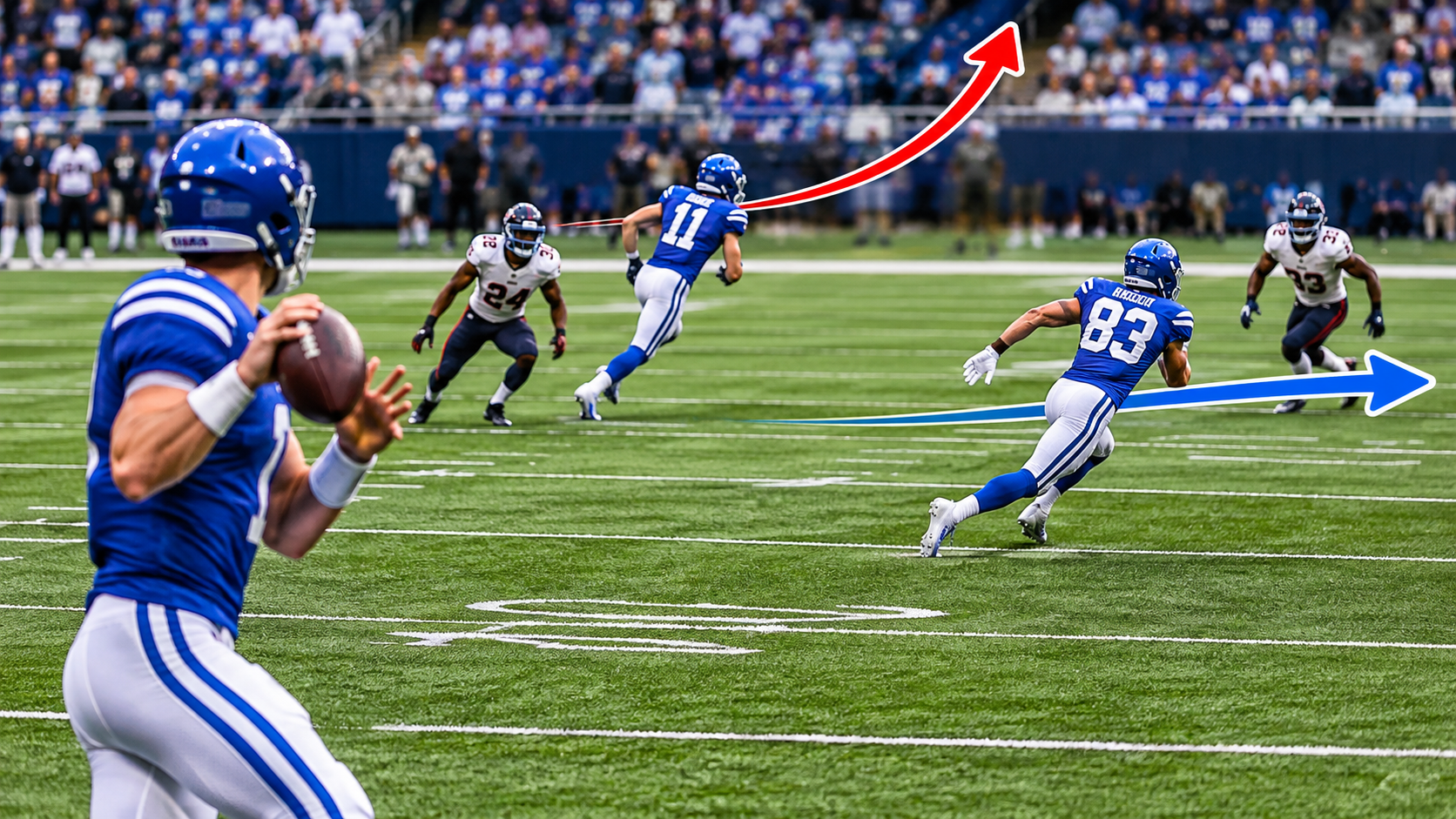
The post dig route is one of the most effective passing combinations in American football. It combines two different receiver routes to create opportunities against defensive coverage, stretch the field, and give the quarterback multiple passing options. Although each route has a specific purpose, their combination makes the play particularly challenging for defenders to anticipate and stop.
Understanding the post dig route can help football players improve their route-running skills, allow coaches to develop more effective offensive strategies, and give fans a better understanding of how passing plays work. It is especially interesting because it relies on timing, communication, spacing, and the quarterback’s ability to recognize defensive movements.
The concept is commonly associated with the Mills passing concept, which uses a deep post route and an intermediate dig route to put pressure on defensive players. Rather than depending entirely on speed or physical strength, the combination uses smart positioning and coordinated movement to create passing opportunities.
In this comprehensive guide, we will explore what the post dig route means, how it works, its individual components, its advantages, the defensive challenges it creates, and the techniques players can use to execute it successfully.
What Is a Post Dig Route in Football?
A post dig route is an offensive passing combination in American football that involves two receivers running different routes at the same time. One receiver runs a post route toward the middle of the field, while another runs a dig route, breaking horizontally toward the middle at a shorter depth.
The primary objective is to make defensive players choose between protecting the deep passing area and covering the intermediate passing area. When executed correctly, the combination creates space for the quarterback to deliver the football to whichever receiver has the better opportunity.
The post route generally attacks the deeper part of the field. Meanwhile, the dig route targets the space underneath it. This creates a vertical stretch on the defense and can force a safety to make a difficult coverage decision.
The post dig combination is also Post Dig Route known as a post-in concept. In many offensive systems, it is associated with the Mills concept, a passing design that uses the relationship between the deep post and intermediate dig to attack defensive coverage.
It is not simply about having two receivers run toward the middle. Their routes must be coordinated carefully so that one route influences the defenders responsible for the other.
Understanding the Two Main Routes
To understand the complete post dig route, it is important to examine the individual movements that create the combination.
What Is a Post Route?
A post route is a vertical passing route in which a receiver initially runs downfield before making an angled cut toward the middle of the field.
The route gets its name from the goalpost area toward which the receiver moves. Instead of continuing straight down the sideline, the player changes direction and attacks the deeper middle portion of the defense.
The receiver usually begins by Post Dig Route running straight downfield to establish a vertical threat. After reaching the designated depth, the player makes a sharp inside break and accelerates toward the goalpost area.
The exact distance and angle depend on the offensive playbook, receiver alignment, defensive coverage, and coaching instructions.
A well-executed post route can create opportunities against defensive backs who are positioned too far toward the sideline or who struggle to maintain inside leverage.
What Is a Dig Route?
A dig route, sometimes called a square-in route, is a passing pattern in which a receiver runs vertically before making a sharp horizontal cut toward the middle of the field.
Unlike a post route, the dig route does not continue diagonally toward the end zone. Instead, the receiver changes direction and moves across the field at a relatively flat angle.
This route is particularly useful for attacking Post Dig Route intermediate defensive zones. It can create opportunities between linebackers and safeties when the receiver reaches the correct area at the correct time.
The receiver must maintain speed through the route while making a controlled directional change. A poorly executed break can allow the defender to recover and close the passing window.
How the Two Routes Work Together
When the post and dig routes are combined, they create a layered passing attack.
The deep post route challenges the safety by threatening the area behind the secondary. At the same time, the dig route moves underneath that deep threat and attacks the intermediate middle of the field.
The quarterback reads the defensive reaction and identifies which receiver has the better opportunity.
If the safety stays deep to protect Post Dig Route against the post route, the dig receiver may find space underneath. If the safety moves toward the intermediate route, the post receiver may have an opportunity behind the coverage.
This relationship is what makes the combination valuable. Both receivers contribute to creating the opportunity, even if only one ultimately receives the football.
How the Post Dig Route Works Step by Step
The effectiveness of this passing combination depends on timing and coordination. Every player involved must understand the purpose of the play and execute their responsibility.
1. Offensive Formation and Alignment
The offense begins by establishing its formation. The receivers may line up outside, in the slot, or in different combinations depending on the play design.
The quarterback and receivers must understand their assignments before the snap. The formation can influence how the defense aligns its cornerbacks, linebackers, and safeties.
Offensive coordinators often consider the position of the ball, available field space, defensive personnel, and expected coverage before selecting the combination.
2. The Snap and Initial Receiver Movement
Once the ball is snapped, both receivers begin their routes.
The receiver running the post route attacks vertically, attempting to establish a deep threat. The receiver running the dig route also starts vertically before preparing for the intermediate inside break.
The initial vertical movement is important because it prevents defenders from immediately identifying the final direction of each route.
Receivers must avoid making their Post Dig Route Post Dig Route breaks too early. Proper route depth helps maintain the intended spacing between the two passing options.
3. The Post Receiver Makes the Inside Break
After reaching the designated depth, the post receiver plants a foot, changes direction, and accelerates toward the middle of the field.
The receiver must maintain balance while making the cut. Losing speed or taking unnecessary steps can reduce separation and give the defender more time to react.
The post receiver’s movement places Post Dig Route pressure on the deep defender and encourages the safety to protect the deeper passing area.
4. The Dig Receiver Attacks the Intermediate Area
At the appropriate depth, the second receiver makes a sharp inside break and moves across the field.
The objective is to reach the space underneath the post route while maintaining enough separation from nearby defenders.
Against zone coverage, the receiver may need to recognize an open area and adjust the route according to the offensive system’s instructions.
Against man coverage, maintaining Post Dig Route separation through the break becomes particularly important.
5. The Quarterback Reads the Defense
The quarterback must identify how the defense reacts to both routes.
The deep safety is often an important player to watch because the combination is designed to create a conflict between the two passing levels.
The quarterback evaluates the coverage, Post Dig Route checks the positioning of the defenders, and determines whether the deep or intermediate option offers the better opportunity.
The quarterback must also consider the pass rush and available throwing window.
6. The Ball Is Delivered to the Best Option
After making the defensive read, the Post Dig Route quarterback delivers the football to the appropriate receiver.
A deep throw requires accurate placement and proper timing. An intermediate throw requires the quarterback to lead the receiver without exposing the football to nearby defenders.
Successful execution depends on more than identifying an open receiver. The quarterback must anticipate where the receiver will be when the ball arrives.
Why the Post Dig Route Is Effective
The post dig route is valuable because it challenges multiple areas of the defense simultaneously. Instead of concentrating the passing attack in one location, it forces defenders to account for different depths and angles.
It Creates a Defensive Dilemma
One of the biggest strengths of this concept is the pressure it places on deep coverage.
A safety responsible for protecting Post Dig Route the middle of the field must consider the deep post while also recognizing the intermediate dig route.
If the defender moves too far toward one route, the other may become available.
This does not guarantee an open receiver, but it creates a difficult assignment for the defense.
It Attacks Multiple Levels of Coverage
The combination can challenge both intermediate and deep defensive areas.
The dig route attacks the middle portion of the field, while the post route threatens the space behind the secondary.
This makes the concept useful for offenses that want to create passing opportunities without relying on a single receiver or one particular depth.
It Provides Multiple Passing Options
The quarterback has more than one potential target.
If the deep route is covered, the intermediate receiver may become the preferred option. If the dig route is taken away, the quarterback can evaluate the post route.
Depending on the play design, an additional underneath receiver can provide another passing option.
This flexibility allows the offense to respond to different defensive reactions.
It Can Produce Significant Yardage
When the defense fails to maintain Post Dig Route proper spacing, the post dig combination can produce substantial gains.
A completed dig route may move the chains and create a manageable offensive situation. A successful post route can produce a much bigger play.
However, the actual result depends on the quarterback’s accuracy, receiver execution, defensive alignment, and pass protection.
Post Dig Route Against Different Defensive Coverages
Understanding defensive coverage is essential for recognizing when this combination can be effective.
Against Cover 1
Cover 1 generally uses man-to-man coverage underneath with one deep safety providing help over the top.
The post route can challenge the single deep safety by threatening the deeper middle of the field.
The dig route provides an intermediate option, particularly when defenders are occupied with their individual assignments.
However, strong man coverage and effective safety positioning can make the combination difficult to execute.
Against Cover 2
Cover 2 typically uses two deep safeties responsible for different portions of the field, with underneath defenders covering shorter areas.
The offensive combination can attack spaces between the underneath defenders and deep coverage.
The quarterback must recognize the positioning of the safeties and understand which route offers the best opportunity.
The dig route can be useful when an intermediate passing window develops, while the post route can challenge deeper coverage depending on the defensive alignment.
Against Cover 3
Cover 3 generally divides deep coverage into three main zones.
The post dig combination can challenge the relationship between the deep defenders and underneath coverage players.
The dig route may attack an intermediate window, while the post route places pressure on the deep middle area.
Defensive adjustments, including pattern matching and linebacker drops, can reduce the available space.
Against Man-to-Man Coverage
Against man coverage, both receivers must create separation from their assigned defenders.
The post receiver needs to use speed, body positioning, and an effective inside break to create an advantage.
The dig receiver must make a sharp cut and avoid allowing the defender to stay attached through the route.
The combination can be particularly dangerous when receivers have strong route-running abilities and the quarterback delivers the ball accurately.
Important Techniques for Running a Successful Post Dig Route
Executing the post dig route requires preparation, communication, and attention to detail.
Route Timing
Timing is one of the most important elements.
If both receivers reach their Post Dig Route target areas too early or too late, the spacing between the routes may not develop as intended.
Receivers must understand the quarterback’s dropback and the expected timing of the passing play.
Consistent practice helps establish the rhythm required for successful execution.
Proper Footwork
Good footwork allows receivers to make sharp directional changes without losing balance.
The post receiver needs to plant and accelerate through the angled break. The dig receiver needs to make a controlled cut and move across the field efficiently.
Players should practice both movements at different speeds to improve consistency.
Maintaining Separation
Receivers must understand how defensive leverage affects their routes.
A defender positioned inside or outside may require a different release technique.
Players should learn to use their initial movement to create a favorable angle before reaching the main breaking point.
Communication Between Players
The quarterback and receivers must understand the same offensive language.
Route adjustments, defensive recognition, and timing expectations should be discussed during practice.
Even a small misunderstanding can cause the receivers to occupy the same space or disrupt the intended passing progression.
Quarterback Decision-Making
The quarterback must remain disciplined when reading the defense.
Rather than automatically throwing to the deepest receiver, the quarterback should identify the coverage reaction and choose the most appropriate option.
Good decision-making also includes recognizing pressure, protecting the football, and avoiding unnecessary risks.
Common Mistakes Players Make
Although the post dig route may appear straightforward, several mistakes can reduce its effectiveness.
One common mistake is breaking the route too early. When a receiver changes direction before reaching the intended depth, the defense may recognize the play and adjust its coverage.
Another problem is poor spacing. If the post and dig receivers move too close together, they can make it easier for defenders to cover both routes.
Receivers also sometimes lose speed during their breaks. A slow directional change gives defensive backs additional time to recover.
Quarterbacks can make mistakes by focusing too heavily on one receiver. The purpose of the combination is to create a decision based on defensive movement, so ignoring the available alternatives can waste the play’s potential.
Poor communication is another major issue. Every player must understand the route depth, adjustment rules, and expected timing.
Correcting these problems requires consistent repetition, video review, and communication between coaches and players.
Training Drills to Improve Post Dig Route Execution
Players can improve their performance by practicing the individual components before combining them into a complete passing play.
Cone Break Drill
Coaches can place cones at the designated route depth.
Receivers run vertically toward the cones before making the appropriate post or dig break.
The exercise helps develop footwork, balance, acceleration, and directional control.
Players should focus on making clean cuts rather than simply running as fast as possible.
Route Timing Drill
The quarterback and receivers practice the combination together.
The quarterback works on dropback timing while both receivers execute their assignments.
The objective is to establish consistent timing between the quarterback’s progression and the receivers’ movements.
Coverage Recognition Drill
Coaches can use players or assistants to simulate different defensive alignments.
The quarterback identifies the coverage and practices making the correct read.
Receivers also learn how their routes interact with defensive positioning.
This drill improves understanding of the complete offensive concept rather than focusing only on individual athletic movements.
Catching and Ball Placement Drill
The quarterback practices delivering the football to receivers running both routes.
Receivers work on catching passes at different angles and maintaining control while moving.
This develops coordination between the passer and the receiving unit.
Variations of the Post Dig Concept
Offensive coordinators can modify the basic combination to suit their personnel and tactical objectives.
The Mills Concept
The Mills concept is a well-known version of the post dig combination.
It traditionally pairs a deep post route with an intermediate dig route to challenge the deep safety.
The quarterback reads how the safety reacts and determines which route offers the best passing opportunity.
The concept can be adjusted through formations, receiver alignments, and additional route combinations.
Post Dig With an Underneath Route
Some offensive systems include an additional receiver running a shorter route underneath the main combination.
This gives the quarterback another option if the defense successfully covers both primary routes.
The underneath route may also influence linebackers and create additional space for the dig receiver.
Play-Action Post Dig
A play-action variation begins with the quarterback making a fake handoff before continuing into the passing progression.
The fake can influence defenders responsible for run support and potentially create more room for intermediate passing routes.
However, the success of this approach depends on the defense’s reaction and the quality of the offensive execution.
Formation-Based Adjustments
The offense can use different formations to change how defenders align before the snap.
Trips formations, two-receiver sets, and different receiver splits can all influence the defensive structure.
These adjustments allow coaches to create different looks while maintaining the same basic passing principle.
The Role of Coaching in Developing the Concept
Coaching plays a major role in making the post dig route successful.
Players need clear instructions about route depth, breaking angles, spacing, and coverage adjustments.
Coaches should explain not only what each player must do but also why the assignment matters.
When receivers understand the purpose of their movements, they can make better decisions during live defensive situations.
Film study is also important. Reviewing Post Dig Route game footage allows players to recognize how defenders react to the combination and identify opportunities for improvement.
Quarterbacks can study safety positioning, linebacker movement, and defensive rotations to become more confident when making their reads.
A strong coaching approach combines technical drills, tactical understanding, and realistic practice situations.
The Importance of the Post Dig Route in Modern Football
Modern football offenses place significant emphasis on

