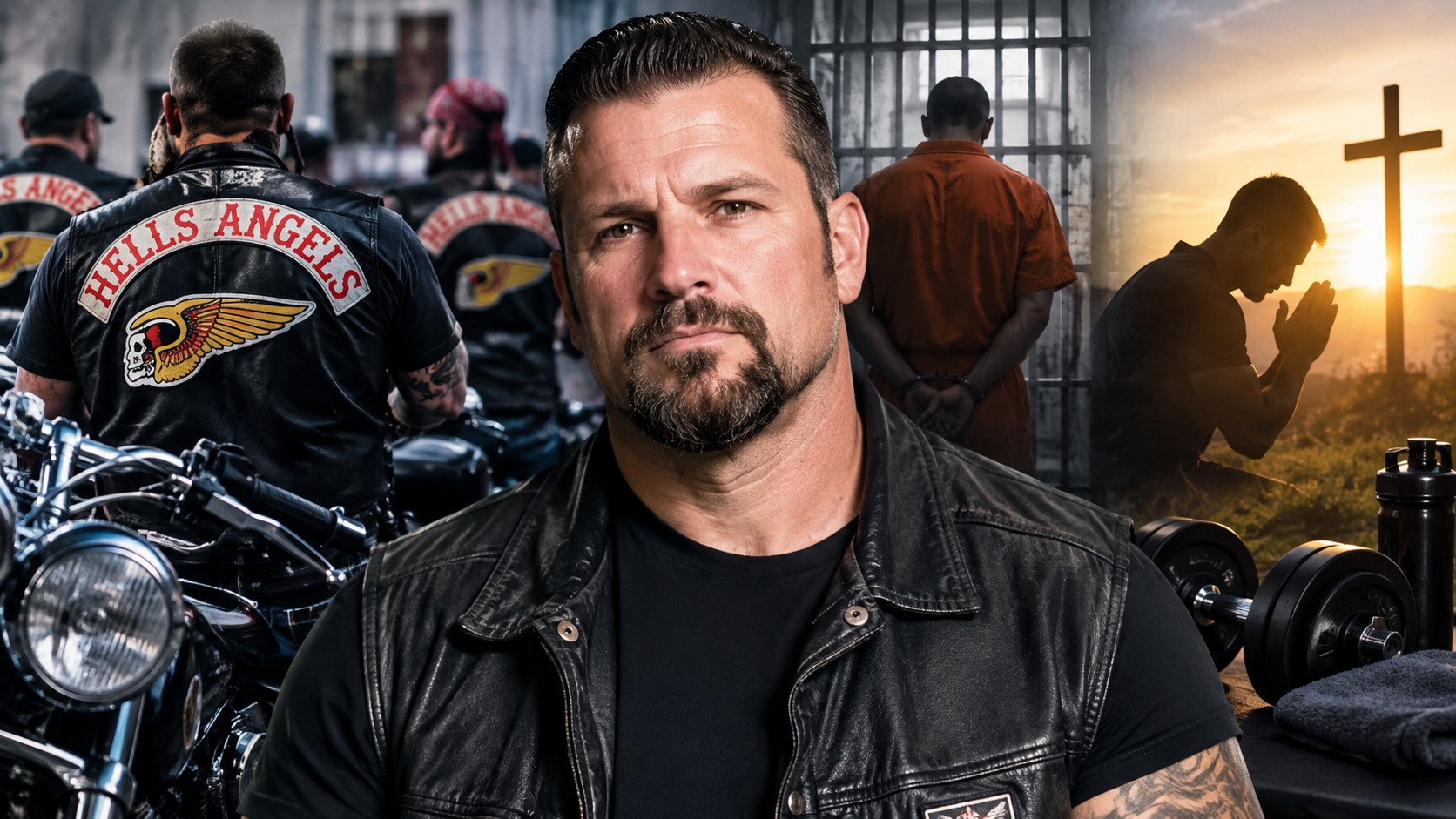
The story of Mel Chancey Hells Angels has attracted attention because it connects several different chapters of one man’s life: his teenage years in Chicago, bodybuilding, motorcycle-club culture, leadership, conflict, imprisonment, faith, and personal transformation. Mel Chancey became associated with the Hell’s Henchmen before the organization transitioned into the Hells Angels, eventually becoming a prominent figure within the Chicago motorcycle-club scene.
What makes his story particularly interesting is the dramatic difference between his earlier life and the life he describes today. His experiences have been discussed in mel chancey hells angels long-form interviews, where he has spoken about his involvement with motorcycle clubs, the responsibilities that came with leadership, conflicts with rival organizations, criminal activity, prison, and the decisions that eventually led him away from that lifestyle.
When researching Mel Chancey Hells Angels, however, it is important to distinguish between Chancey’s personal recollections, media accounts, and independently documented historical or legal information. Some details about his past come directly from his own descriptions, so readers should treat personal accounts as perspectives rather than automatically assuming every anecdote has been independently verified.
Who Is Mel Chancey?
Mel Chancey is a former Chicago-area motorcycle-club member who became involved with the Hell’s Henchmen at a young age and later became associated with the Hells Angels. His story has received renewed attention because of his detailed discussions about his former life and the transformation that followed.
Chancey has described growing up in Illinois and becoming interested in bodybuilding during his teenage years. According to his public accounts, his connection mel chancey hells angels with motorcycle-club members developed through the gym environment. At first, his interest was influenced by the physical appearance, confidence, motorcycles, and sense of brotherhood he observed among older members.
Over time, that curiosity became much more serious involvement.
His life eventually moved far beyond bodybuilding. He became deeply involved in the organizational structure of a motorcycle club and later held leadership responsibilities. The combination of his young age and rapid rise through the club hierarchy became one of the most discussed parts of his biography.
Today, Chancey presents himself mel chancey hells angels very differently from the young man who entered that environment. His later life has focused heavily on fitness, family, faith, personal development, and sharing lessons from his past.
Mel Chancey and the Hell’s Henchmen
To understand the Mel Chancey Hells Angels story, it is necessary to look at the Hell’s Henchmen first.
The Hell’s Henchmen were a mel chancey hells angels Chicago-area motorcycle club that existed before the organization became associated with the Hells Angels. Chancey’s involvement began during his youth, and he has described gradually becoming more committed to the group.
The attraction was not simply mel chancey hells angels about motorcycles. Motorcycle clubs can provide members with a strong sense of identity and belonging, particularly for young people searching for community, recognition, or a defined social environment.
Chancey has described becoming mel chancey hells angels fascinated with the appearance and lifestyle of the older men he encountered. Their motorcycles, clothing, physical strength, confidence, and relationships created an image that appealed to him.
As his involvement increased, the recreational side of motorcycle culture became intertwined with the more serious organizational structure of the club.
The Club Hierarchy
Chancey has discussed a hierarchy mel chancey hells angels involving positions such as president, vice president, sergeant-at-arms, secretary, treasurer, and road captain.
Each role carried different responsibilities. Leadership involved decision-making, internal organization, and relationships with other chapters or clubs. The sergeant-at-arms role was particularly associated with discipline and enforcement within the organization.
Chancey’s movement through mel chancey hells angels these positions contributed to his reputation inside the club environment.
His story demonstrates how mel chancey hells angels quickly a young person’s identity can become connected to an organization when social relationships, loyalty, authority, and status become closely connected.
The Transition to the Hells Angels
One of the most important chapters in the Mel Chancey Hells Angels story was the transition from the Hell’s Henchmen into the Hells Angels.
According to Chancey’s account, mel chancey hells angels the transition occurred during the 1990s. This was a period when motorcycle-club rivalries were already an important part of the history of the American Midwest.
Chicago had a particularly significant motorcycle-club culture, and the presence of established organizations created a complicated environment for newer or expanding groups.
The transition to the Hells Angels mel chancey hells angels therefore represented more than a change in the name on a patch. It connected the Chicago organization to a much larger international motorcycle-club organization and changed the relationships surrounding its members.
For Chancey, this period also coincided with his increasing responsibilities and growing prominence.
Why Chicago Was Important
Chicago has played a notable role in the mel chancey hells angels history of American motorcycle clubs. The city and surrounding areas have been associated with several organizations, including the Outlaws and other groups.
Motorcycle-club relationships mel chancey hells angels can involve friendship, cooperation, rivalry, territorial disagreements, and competition for influence. During the period discussed in Chancey’s accounts, these relationships could become extremely tense.
Chancey has spoken about an environment where members were highly conscious of rival organizations and possible confrontations.
His recollections include stories mel chancey hells angels involving violence, threats, property damage, and serious conflicts. These accounts form an important part of the public story surrounding his years in the motorcycle-club world.
At the same time, it is important not to generalize from this history to motorcycle enthusiasts as a whole. Motorcycle ownership and riding are widespread recreational activities, while outlaw motorcycle clubs represent a specific subculture with its own history and organizational practices.
Mel Chancey as a Young Leader
Another reason people search for Mel Chancey Hells Angels is the claim surrounding his age and leadership position.
Recent discussions of Chancey’s mel chancey hells angels life have described him as becoming a chapter president at a very young age, with some accounts identifying him as being around 23 when he assumed that responsibility.
The claim that he was the youngest president in Hells Angels history has become part of the way his story is presented in recent media coverage. However, claims of historical records of this kind are difficult to establish definitively without comprehensive organizational documentation.
What is clear from Chancey’s own account mel chancey hells angels is that he held a significant leadership role while still a young man.
Leadership within a motorcycle club brought considerable responsibility. It meant dealing with internal disputes, relationships between members, other motorcycle clubs, and the consequences of decisions made by people operating within a highly structured environment.
The Culture of Brotherhood
One of the strongest themes in Chancey’s story is brotherhood.
He has repeatedly discussed the importance of loyalty and relationships within the club. For many people who become deeply involved in tightly connected organizations, leaving can be difficult because departure means losing not only an activity but also a social identity.
That helps explain why motorcycle-club membership can become such a powerful part of a person’s life.
For Chancey, the relationships created during his younger years remained important even as his attitude toward the lifestyle changed.
The concept of brotherhood is therefore central to understanding both his decision to join and the difficulty involved in eventually leaving.
Conflict and Violence
The more controversial aspects of the Mel Chancey Hells Angels story involve violence.
Chancey has described confrontations between motorcycle clubs and incidents that he says became increasingly serious. His accounts include stories about physical confrontations, threats, weapons, and attacks on club property.
These stories provide insight into how he remembers the environment during that period.
However, personal recollections should be separated from independently established facts. Stories surrounding motorcycle clubs are often repeated for decades, and details can change as they move from one person to another.
For that reason, a careful examination of Chancey’s history should distinguish between what he personally says happened and what can be confirmed through official records.
The broader point remains important: Chancey’s own description portrays a lifestyle in which confrontation could carry serious consequences.
Criminal Activity and Legal Problems
Another major part of Chancey’s biography involves criminal activity and federal prosecution.
In discussions of his past, Chancey has acknowledged involvement in illegal activities during his years in the motorcycle-club environment. He has spoken about drugs, weapons, and other criminal conduct as part of the lifestyle he eventually abandoned.
His legal problems eventually became a defining point in his life.
Public accounts of his biography describe federal prosecution involving organized-crime-related charges and a period of imprisonment. These legal consequences marked a major turning point.
For Chancey, prison was not simply an interruption in his life. It became part of the larger transformation that followed.
The experience forced him to confront the consequences of decisions made during his younger years and eventually contributed to his decision to pursue a different future.
Prison as a Turning Point
Chancey’s descriptions of prison focus heavily on transformation.
People who spend years inside a highly controlled environment often have considerable time to reflect on earlier decisions. In Chancey’s story, this reflection became connected to faith, personal responsibility, and a desire to change.
His later public identity is substantially different from the one associated with his younger years.
Instead of promoting the motorcycle-club lifestyle, he has increasingly spoken about its consequences. He has used his experiences to discuss personal choices, discipline, faith, and the importance of avoiding destructive environments.
This change is one of the most significant elements of his biography.
Why Mel Chancey Stopped Riding
An especially interesting part of the Mel Chancey Hells Angels story is his decision to stop riding motorcycles.
Chancey has said that he stopped riding in the early 2000s. He has explained that motorcycles were strongly connected to his former lifestyle, including the people, places, and habits associated with that period.
For this reason, stepping away from motorcycles became symbolic of stepping away from his previous identity.
The decision illustrates an important concept in personal transformation: sometimes changing one’s environment is just as important as changing one’s intentions.
For Chancey, leaving the motorcycle behind represented a physical and psychological separation from the world he had previously occupied.
Bodybuilding and Physical Fitness
Bodybuilding has remained an important part of Chancey’s identity throughout different stages of his life.
His interest in fitness began before his motorcycle-club involvement became serious. As a teenager, he was fascinated by building strength and developing his physique.
That interest continued after his motorcycle-club years.
In his later life, fitness became associated with discipline and self-improvement rather than the image of physical intimidation that had surrounded his earlier identity.
This makes bodybuilding an important connecting point between the different stages of his life.
The gym was reportedly where he first encountered people connected with the Hell’s Henchmen, while fitness later became part of the healthier identity he developed after leaving the club world.
Faith and Personal Transformation
Faith is another major theme in Chancey’s later life.
His childhood included religious influences, but his teenage and adult years took him in a very different direction. Eventually, he returned to Christianity and began presenting faith as an important part of his transformation.
His later public discussions frequently connect faith with forgiveness, responsibility, and personal change.
This does not erase the events of his earlier life, but it provides the framework through which Chancey now interprets those experiences.
His story therefore illustrates how people can reinterpret their past after experiencing major personal consequences.
Family and a Different Life
Another important part of Chancey’s post-club identity is family.
His later life has been described in terms of marriage, children, grandchildren, fitness, and faith. These relationships represent a major contrast with the unstable and confrontational environment he describes from his earlier years.
Family can provide a different kind of identity from the one offered by a tightly controlled organization.
For Chancey, building a family-centered life became part of moving away from the values and behaviors that had previously dominated his world.
Mel Chancey in Recent Media
Interest in Chancey increased significantly following his appearances in long-form media discussions.
Long-form interviews have allowed him to discuss his life in considerably more detail than traditional short news reports typically permit.
He has talked about his childhood, bodybuilding, motorcycle clubs, leadership, conflicts, criminal activity, prison, faith, and life after leaving the organization.
The extended format is particularly useful for understanding how he connects different events in his life.
Rather than treating his Hells Angels years as an isolated chapter, his interviews present them as one part of a much larger personal journey.
What Makes His Story Interesting?
The continuing interest in Mel Chancey Hells Angels is partly explained by the contrast between his past and present.
His story includes elements that naturally attract public attention: youth, motorcycles, leadership, conflict, crime, prison, bodybuilding, religion, and personal reinvention.
But the deeper interest comes from the question of identity.
Who does someone become after mel chancey hells angels spending years inside a powerful social organization? What happens when that identity is removed? How does a person rebuild relationships, habits, beliefs, and goals?
Chancey’s later life provides one personal example of that process.
It also demonstrates why stories about former motorcycle-club members should not be reduced to stereotypes. His life includes both the serious consequences of his former activities and the effort he says he has made to move beyond them.
Important Considerations When Researching Mel Chancey
Readers researching Mel Chancey Hells Angels should be careful with information found online.
Some articles repeat the same claims without identifying where the original information came from. Other accounts are based primarily on Chancey’s interviews.
This does not mean his recollections are unimportant. First-person testimony can provide valuable insight into experiences that outsiders may not understand.
However, personal testimony and independently verified historical evidence are different types of information.
Dates, legal outcomes, organizational history, and specific incidents are best understood through reliable records whenever possible.
This distinction becomes especially important when discussing criminal allegations or events involving violence.
Frequently Asked Questions
Who is Mel Chancey?
Mel Chancey is a former Chicago-area motorcycle-club member who became associated with the Hells Angels after previously being involved with the Hell’s Henchmen. He later served time in federal prison and developed a different public identity centered on fitness, faith, and personal transformation.
Was Mel Chancey a member of the Hells Angels?
Yes. Chancey has publicly described his involvement with the organization and his leadership role during the period following the transition of the Hell’s Henchmen into the Hells Angels.
How did Mel Chancey become involved with motorcycle clubs?
According to his own accounts, his introduction to motorcycle-club culture came through a gym where he encountered older members. His initial interest in bodybuilding and admiration for the lifestyle gradually developed into deeper involvement.
How old was Mel Chancey when he became a chapter president?
Public accounts of Chancey’s story describe him becoming a chapter president in his early twenties, with some accounts placing his age at approximately 23. The broader claim that he was the youngest president in Hells Angels history is part of his public biography but is difficult to independently establish as a definitive historical record.
Did Mel Chancey go to prison?
Yes. His biography includes federal criminal prosecution and a period of imprisonment. He has discussed this period publicly as an important turning point in his life.
Does Mel Chancey still ride motorcycles?
Chancey has said that he stopped riding motorcycles in the early 2000s. He has explained that leaving motorcycles behind helped him separate himself from the lifestyle associated with his former club life.
What does Mel Chancey focus on today?
His later public identity has focused on fitness, bodybuilding, faith, family, personal development, and discussing lessons from his earlier experiences.
Conclusion
The story of Mel Chancey Hells Angels is ultimately a story of transformation as much as it is a story about motorcycle clubs.
Chancey’s life moved through several dramatically different stages. He began as a young man interested in bodybuilding and fascinated by older motorcycle-club members. mel chancey hells angels His involvement with the Hell’s Henchmen eventually developed into leadership within the Hells Angels environment. That period brought relationships, status, conflict, criminal activity, and eventually serious legal consequences.
Prison became an important dividing line in his life. Afterward, Chancey began developing a different identity built around faith, fitness, family, and personal responsibility.
His story should be understood carefully because many details come from his own recollections and later interviews. Nevertheless, the broader narrative remains compelling: a young person became deeply involved in a powerful subculture, experienced the consequences of that lifestyle, and later attempted to build a completely different future.
For readers searching for information about Mel Chancey Hells Angels, the most useful perspective is therefore not simply to focus on his years inside the motorcycle club. His complete story includes the circumstances that drew him into that world, the leadership and conflicts he experienced, the legal consequences that followed, and the transformation he says occurred after leaving it behind.